Beyond Openness:
A new paradigm for understanding adoption—Part 2
By Richard Pearlman, LCSW
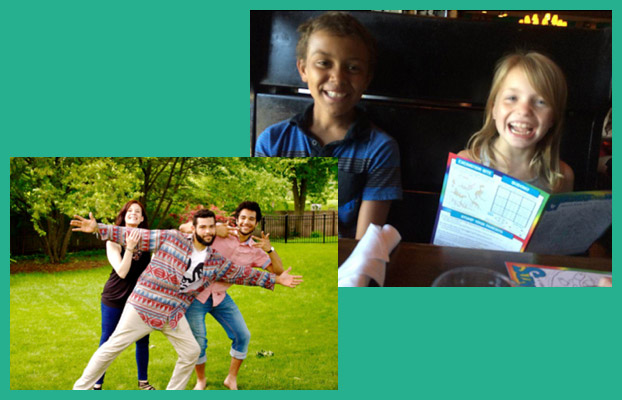
For decades the adoption field has moved from one prevailing model to another — from orphan trains, to closed adoption, to the modern concept of open adoption. But each paradigm has revealed its own limitations. In this second installment, Richard Pearlman proposes a different way to understand adoption: not as an “open” or “closed” arrangement, but as an extended family network.
The limits of the open adoption model
In the last issue, the concept of paradigms and a brief history of the modern adoption era was presented. Part 1 concluded with a challenge to the efficacy of the existing “open adoption” paradigm. In this second part of the article a new adoption paradigm is described and proposed.
A paradigm is a model or pattern for something that may be copied, or a theory or group of ideas about how something should be done or thought about.
Robert Noone, Ph.D., wrote in the Spring 2016 Family Journal, “New paradigms generally emerge when a sufficient number of discrepancies or anomalies arise which cannot be explained within the predominant paradigm.”
The prevailing conventional adoption paradigm since the early 1990s has been expressed through the concept of open adoption.
However, the concept of open adoption means different things to different people. For some it means regular visits and close, ongoing contact between the birth family and adoptive family. To others it means that birth mothers will receive annual written reports and photographs for a set period of time. For some, it means sharing identifying information, and for others, intermediaries are used to facilitate communication. Nonetheless, the term open adoption has become a conventional term/concept/paradigm that permeates the landscape, culture and practice of adoption today.
The many meanings of open adoption
In addition to being ill-defined, the open adoption paradigm does not address all the needs and wishes of young people who are interested in having contact with members of their family of origin; or the anxieties of adoptive parents who feel slighted and threatened when their children express affection for people with whom they are genetically related.
Birth parents frequently report feeling that their wishes for future contact were respected right up until they signed relinquishments, but then changed (many say that the promise of “open adoption” was used to trick them into signing relinquishments); and adopted people frequently struggle to understand what kinds of relationships are “okay” between them and genetically related family members.
There is no unanimity of thought or understanding about what open adoption means. This lack of clarity invariably leads to confusion and misunderstandings between birth parents and adoptive parents and within extended family networks.
All one has to do is find a birth parent or adoptee blog on social media to get a sense of the frustration and dissatisfaction with the current state of affairs, even when adoptive families say that they participated in an open adoption (whatever that means to them).
One adoptee blogger wrote: “Orphan trains followed by homes for unwed mothers, then to secretive closed adoptions to open adoptions and reunification. A hundred years and continuing evolution, and now hopefully the end of the practice of adoption.”
It is clear that the current open adoption paradigm needs to change and a new paradigm must emerge, one that speaks to the experience of adoption in a completely new way.
A different way to understand adoption
What then lies beyond open adoption? Here is the new adoption paradigm that I propose:
When a child is adopted, everyone related to that child becomes part of a larger extended family network.
The ramifications of integrating and accepting this new paradigm are enormous.
- We would need to stop talking about how adoption creates forever families — because they are an illusion. All families change over time, whether caused by divorce, marriage, adoption, aging, communication breakdowns, birth or death, illness or simple family rifts.
- We would have to recognize that families are not created through adoption, but rather, they are changed through adoption. (Does marriage or divorce create or deconstruct a family or does it change a family?)
- Rather than forcing people to adopt a philosophy supporting their vision of open adoption, agencies would need to begin supporting their clients (all of them) in thinking for themselves. Perhaps by posing questions like: “Who should determine who adults get to contact within their own extended family network?” and “Is it typical for contacts between family members in your extended family to be stipulated in writing and witnessed by a court?” If not — why does it have to be stipulated in the case of an adopted child?
- We as adoption professionals would need to ask ourselves why so many birth parents and adoptees are angry and railing against the practice of adoption, which the most disgruntled describe as an “industry.”
- And, we would need to examine what is it about the conventional terminology [open adoption] that leads to so much misunderstanding.
Rethinking family relationships after adoption
If the paradigm shifts from the predominant belief in open adoption to one that encourages a better understanding of what it means to be a part of an extended family network that includes people who were adopted, then written post-adoption communication agreements (which are frequently broken and all but impossible to enforce) become unnecessary and an oxymoron.
Do the people we serve have written agreements mandating which uncles or cousins they will see and how often? Are there third parties in any adult’s life that dictate which extended family network members they may or may not have contact with?
What if intra-family communication in family systems where adoption is present isn’t as complicated as some fear?
When people use the term “forever family” — what are they talking about? Children are always born into a family. When they are adopted, the people who adopt the child, and the genetic relatives of the child become part of a larger extended family network, in a way similar to when two people enter into a marriage.
Everyone is born into a family that encompasses people who are not genetically related. In modern times it is not uncommon for families to be blended and include siblings who are not genetically related.
Everyone intrinsically understands that members of their extended family network are important to him or her. Recognizing that one is a member of an extended family network does not require that person to have contact with every member of the family within their network.
The implications of understanding and embracing this paradigm shift are enormous. While the new paradigm may not reduce anxiety, fear or misunderstanding, it opens up the possibility of better understanding of what adoption is really about.
How adoption paradigms continue to evolve
Orphan trains, The Chosen Child, closed adoptions and open adoptions, each opened their own Pandora’s Box. Each new paradigm created its own discrepancies that became self-evident.
The orphan train disregarded the safety and well-being of children. The Chosen Child created a delusion that children were magically available for anyone who wanted or needed one, closed adoption required that people attempt to live with secrecy, shame and denial, and open adoption in its turn created the illusion that somehow a child’s needs were being met if they got to know more about their birth parents — even though no one knew how to regulate or manage ongoing relationships between the adoptive mom and the “tummy” mommy, or what to do about other related siblings and extended family members.
Viewing adoption through the lens of family
When a new paradigm emerges, it takes time for people to understand and adjust to it. If agencies and individuals began to look at adoption through the lens of extended family networks as opposed to whether an adoption is open or closed, everyone’s responsibility becomes clear and adoption will begin to be viewed within the context of family.
Legal parents continue to have responsibility for their children, and they decide when and with whom their children interact. Choosing whether or not to have contact with a family network usually has to do with the circumstances and realities of the relationship. The mother may not want her children spending time with their uncle (her brother) because he abuses alcohol, or because her children express discomfort being alone with their uncle. A husband may wish to spend more time with his mother than his wife chooses. Family relationships remain open to dialogue and inevitably change over time.
As children grow they have more say about who within the extended family network they will have contact with. By the time children are in their teens their parents have little influence over who they spend time with. The more emotionally intelligent parents are, the more they find ways to embrace those people within the family who their children feel drawn to.
A new paradigm for the future of adoption
Adopted people, young and old, are making contact with people they are genetically related to more and more frequently. The advent of the Internet and social media make such contacts easy to arrange and activate.
To describe a relationship as an open adoption, when an adoptee develops a relationship with a genetically related sister who had not been adopted, is simply not accurate. When siblings are separated by divorce and later in life form relationships, no one describes these relationships in terms of whether they are “open” or “closed;” what they say is that they are siblings and that they are related and have every right to get to know each other if they want to.
This new adoption paradigm is irrefutable. I’ve talked with hundreds of birth parents and adopted people and have yet to find one who has not immediately understood what is being proposed. Almost every person has felt that this new adoption paradigm was accurate and that it completely described their experience with life and adoption. Many adoptive parents and professionals who have been exposed to this new concept/idea/paradigm also find it accurate and useful.
The field of adoption is facing unprecedented challenges and clearly it is time to move beyond the paradigm of open adoption that took hold in the 1980s. The time to view adoption through a new paradigm and the lens of extended family networks has come.
Richard Pearlman is a retired licensed clinical social worker and former founder and executive director of the Adoption Center of Illinois at Family Resource Center. He helped draft the 2005 Illinois Adoption Reform Act, which ended the commercial practice of adoption in Illinois and championed birthparents’ rights. In 2025, he founded the Adoption Chronicles Project which showcases adoption experiences from all points of view. He lives in Chicago and continues to write and speak about adoption and family systems.